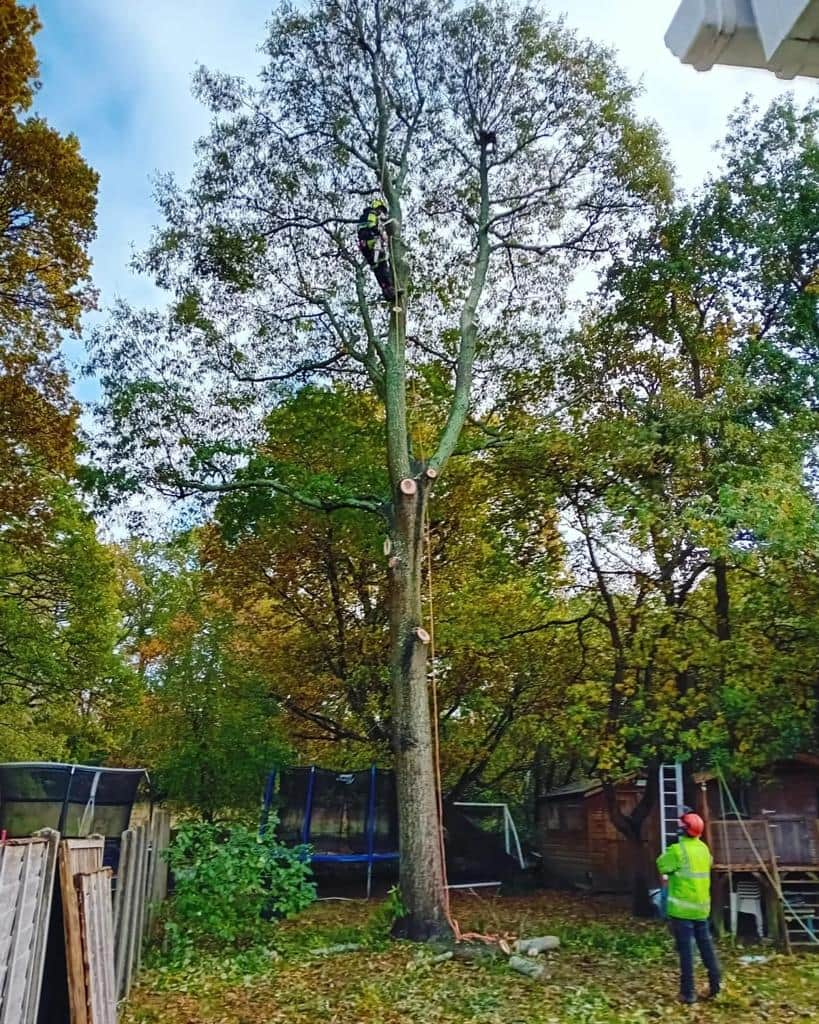
Mature trees can provide shade, privacy and character, but branches growing above or close to a building may create problems for the roof. The risks are not limited to branches falling during severe weather. Repeated contact, accumulated debris and restricted airflow can gradually affect roof coverings, gutters and drainage routes.
For homeowners in Saffron Walden, Essex, professional tree management can help maintain suitable clearance while preserving the tree’s natural shape and condition. The most appropriate work depends on the species, branch structure and proximity to the property.
How Overhanging Trees Can Affect Your Roof
A tree does not have to appear unstable to interfere with a roof. Healthy branches can become problematic when they extend too far over the building or move against roofing materials during windy conditions.
Branches Can Damage Tiles and Slates
Branches positioned close to a roof may repeatedly rub against tiles, slates, ridge details or flashing. Even relatively small branches can scrape surfaces, disturb coverings and place pressure on vulnerable edges.
This movement may gradually loosen materials or damage their protective finish. The problem can be difficult to see from ground level, particularly where the branch conceals the affected section.
Falling Limbs Can Cause Sudden Damage
Dead, weakened or poorly attached branches may fall during strong winds or after prolonged rainfall. A substantial limb can crack tiles, damage guttering or affect the supporting structure beneath the roof covering.
Smaller branches may also create localised damage if they strike delicate junctions, roof windows or flat roofing materials. Identifying unsuitable branches before they fail can reduce the likelihood of an unexpected impact.
Leaves and Twigs Can Block Gutters
Overhanging trees regularly shed leaves, twigs, seeds and small pieces of bark. This material can collect in gutters, outlets and downpipes, restricting the flow of rainwater.
When drainage routes become blocked, water may overflow onto fascia boards, walls and roof edges. Debris can also accumulate in valleys and behind roof features, where it holds moisture and interrupts normal drainage.
Moss Growth May Become More Persistent
Dense canopies can keep parts of a roof shaded for long periods. Reduced sunlight and airflow allow surfaces to remain damp after rainfall, creating favourable conditions for moss and organic growth.
Heavy moss can obstruct drainage channels, lift the edges of some roof coverings and contribute to debris in the gutters. Improving clearance around the building may help the roof dry more effectively.
Branch Movement Can Disturb Roof Edges
The edges of a roof are particularly exposed to wind and weather. Where branches move against verges, eaves or guttering, repeated contact can weaken fixings or distort components over time.
Damage may begin gradually, with no immediate internal signs. Maintaining separation between the canopy and the building helps prevent ongoing friction.
Animals Can Gain Easier Access
Branches extending onto or immediately above a roof can create a convenient route for birds and small animals. They may disturb loose materials or gain access through existing openings at the eaves or other vulnerable details.
Pruning suitable branches does not guarantee that animals will never reach the roof, but it can remove a direct route and make the roofline easier to inspect.
Debris Can Collect on Flat Roofs
Flat and low-pitched roofs do not shed fallen material as readily as steeper surfaces. Leaves and twigs may gather around outlets, edges and roof penetrations.
As the debris becomes wet, it can retain moisture and slow drainage. Tree work that reduces excessive overhang can help limit the volume of material reaching these areas.
Trees Can Make Roof Inspections More Difficult
A dense canopy can obscure roof coverings, chimneys and junctions from view. This may allow cracked tiles, damaged flashing or blocked drainage details to remain unnoticed.
Improving clearance can make routine observation easier and provide better access when the roof requires professional inspection or maintenance.
Warning Signs That Tree Work May Be Needed
A professional assessment may be helpful if you notice:
- Branches touching or scraping the roof
- Deadwood positioned above the property
- Large limbs extending over the building
- Repeated gutter blockages
- Heavy leaf deposits in roof valleys
- Persistent moss beneath a dense canopy
- Branches resting on gutters or roof edges
- Recent cracking or movement within the tree
The urgency depends on the size, condition and position of the affected branches.
What Type of Tree Surgery May Help?
The correct approach should be determined by the tree’s structure and the required clearance. Selective pruning may be sufficient where only a few branches are interfering with the building.
Crown reduction can reduce the overall spread of an overextended canopy while retaining a balanced outline. Crown lifting may improve vertical clearance by removing selected lower branches. Deadwood removal can address unsuitable branches without significantly changing the tree’s overall size.
Excessive or poorly positioned cuts can encourage weak regrowth and leave the canopy unbalanced. Professional tree surgery aims to achieve useful clearance without removing more growth than necessary.
Why Professional Assessment Matters
Branches growing above a roof can be difficult to access and may need to be lowered in controlled sections. Their weight and direction of movement must be considered carefully to avoid contact with the building, garden features or nearby planting.
A tree surgeon can assess branch condition, plan the work and use appropriate climbing, rigging and cutting techniques. The assessment may also identify problems that are not obvious from below, such as cracks, decay or weak branch unions.
Coordinating Tree and Roof Maintenance
If a tree has been touching the roof or has dropped a substantial branch, both the canopy and the affected roofing area should be checked. Removing the branch addresses the source of interference, but any displaced tiles, damaged guttering or affected flashing may still require attention.
Coordinating the work helps ensure that the tree has suitable clearance and the roof remains weather-resistant.
Conclusion
Overhanging trees can contribute to damaged roof coverings, blocked gutters, persistent dampness and difficult roof maintenance. The risk is greatest where branches touch the building, contain deadwood or deposit significant debris onto the roof.
Saffron Walden Tree Surgeons can assess trees growing close to properties and recommend suitable pruning to improve clearance while maintaining a balanced canopy. If branches are extending over your roof in Saffron Walden, Essex, contact the team to arrange a professional assessment.
Call us on: 01799 610 374
Click here to find out more about Saffron Walden Tree Surgeons
Click here to complete our contact form and see how we can help with your tree care needs.